
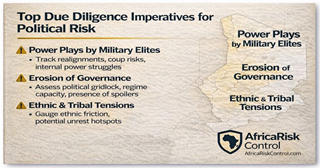
 Chad is often misread through the wrong lens. Market size metrics understate its importance, while strategic risk exposure is routinely underestimated.
Mozambique 2026: A High-Consequence Market, Not a High-Volume One
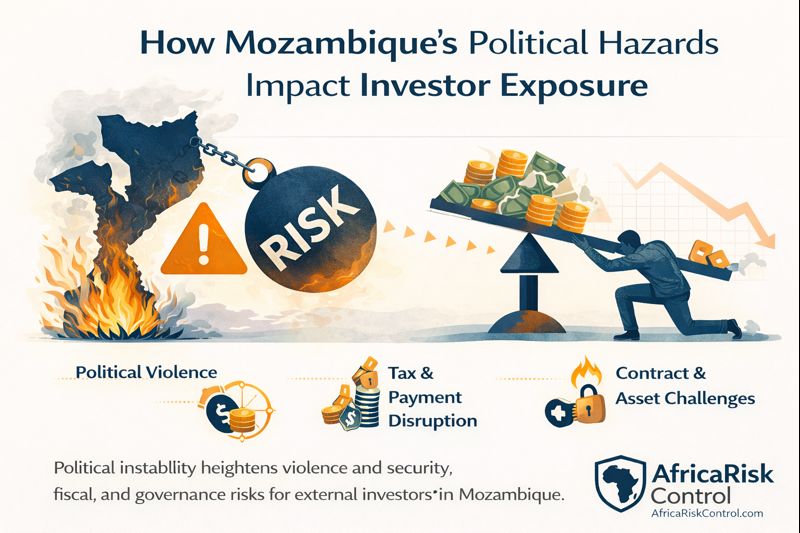 Mozambique is entering 2026 as a market where decisions carry outsized consequences. It is not a high-volume investment destination, but it is increasingly a high-impact one—particularly for energy, infrastructure, logistics, and development-linked operators.
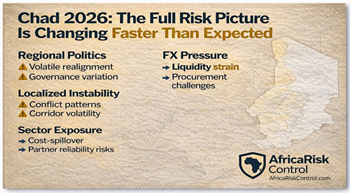
Chad 2026: Why Most Risk Assessments Fail Before Projects Even Begin
Foreign Powers and the Red Sea Equation in Sudan, Ethiopia, and Eritrea
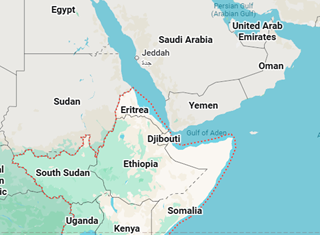 East Africa is entering a new phase of strategic risk, one defined not by isolated national crises but by interlocking conflicts and external power competition.
How District-Level Realities Shape Investment Risks in Ethiopia in 2026
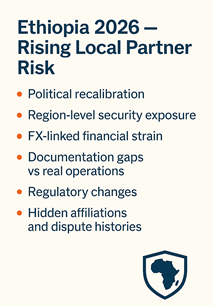 Two new reports by Africa Risk Control (ARC) have stated that Ethiopia’s 2026 risk environment is now shaped more by district-level developments than national indicators.
Uganda 2026: Why the Election Next Month Changes the Risk Equation
 Uganda is entering a decisive phase as the country approaches a national election next month — a period that historically reshapes political behavior, regulatory discretion, security posture, and institutional responsiveness.
Uganda’s 2026 Elections: Political Trajectories and Investment Implications
 Africa Risk Control (ARC) Investment Risk Analysis – Uganda’s general elections, scheduled for 15 January 2026, arrive at a critical moment for investors assessing East Africa’s medium-term risk outlook. While Uganda remains one of the region’s more resilient investment destinations, election cycles have historically introduced short-term volatility that can materially affect policy execution, regulatory behavior, and operational continuity.
ARC Observes Shifting Sector Opportunities as Ethiopia Prepares for 2026
Africa Risk Control (ARC) has released new insights into how sector opportunities in Ethiopia are shifting due to political, economic, and security pressures. The organization reports that while long-term potential remains strong, sectors face differing levels of exposure as the country moves toward 2026.
Ethiopia’s Emerging Investment Risks in 2026 Tied to Governance, Localized Tensions
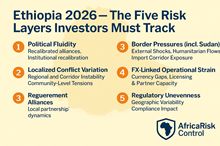 Africa Risk Control (ARC) has identified growing concerns around governance inconsistency and district-level tensions that could influence Ethiopia’s 2026 investment landscape.
Ethiopia’s 2026 Investment Climate Depend Heavily on Corridor Stability
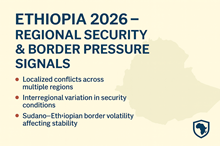 Africa Risk Control (ARC) in its new report stated that corridor stability and local mobility will be decisive factors for Ethiopia’s investment environment in 2026. The organization’s assessments highlight how short-term disruptions continue to affect key transport routes.