
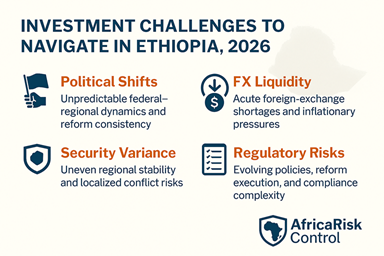
 Ethiopia’s 2026 investment outlook will be significantly influenced by region-level variations in governance, security, and operational conditions, according to new analysis published by Africa Risk Control (ARC). The firm’s latest assessment highlights how differences across regions are expected to shape business performance, partnership reliability, and project implementation in the coming year.
Ethiopia
ARC Report Highlights Rising Risks for Foreign Investors as Ethiopia Approaches 2026
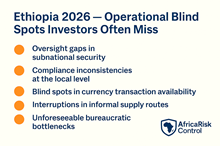 Africa Risk Control (ARC) has warned that Ethiopia’s risk environment is becoming increasingly complex ahead of 2026, with changes in political dynamics, currency pressure, and localized instability influencing the business landscape. The organization’s latest assessment suggests that investors will need more detailed intelligence to navigate these emerging challenges.
When Citizens Become the Veto: Kenya’s IMF Experience and Implications
 By Africa Risk Control (ARC)- Kenya has not formally exited its relationship with the International Monetary Fund (IMF) though rumors have been spreading. What has changed—and with far greater political consequence—is that citizen resistance has made IMF-aligned austerity measures politically ungovernable.
Why Ethiopia’s 2026 Environment Requires Continuous Monitoring
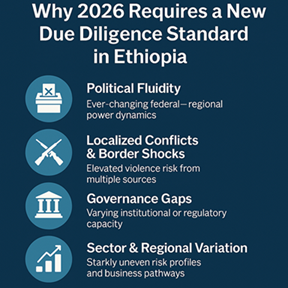
Operational Blind Spots Investors Must Address Ahead of Ethiopia’s 2026 Transition
 Africa Risk Control (ARC) has identified several operational blind spots that investors need to address as they prepare for Ethiopia’s 2026 environment.
Corridor & Mobility Risk in Ethiopia: A Critical Factor for 2026 Operations
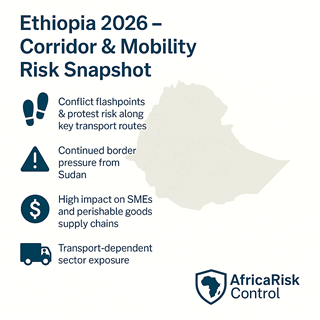 Africa Risk Control (ARC) has highlighted increasing mobility disruptions and corridor volatility that could influence Ethiopia’s transport and logistics sector in 2026. These developments pose a significant challenge for industries dependent on consistent movement of goods.
Foreign Powers and the Red Sea Equation in Sudan, Ethiopia, and Eritrea
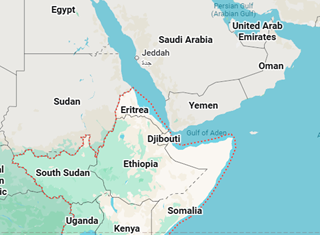 East Africa is entering a new phase of strategic risk, one defined not by isolated national crises but by interlocking conflicts and external power competition.
What Global Investors Are Asking ARC About Ethiopia’s 2026 Outlook
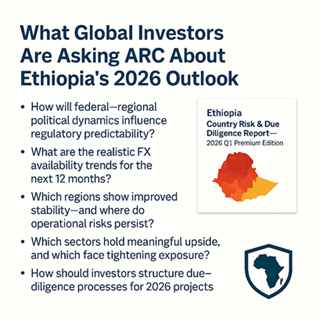 As Ethiopia moves toward 2026, the questions raised by investors, development partners, and multinational operators are becoming more focused and more urgent. Africa Risk Control (ARC) has observed a noticeable shift in the type of intelligence and risk-related insights global institutions request. This reflects the evolving nature of Ethiopia’s political, economic, and security environment — and the need for more grounded due-diligence inputs.
Cross-Border Investment Opportunities in Emerging African Markets
 By Africa Risk Control Southern Africa Desk – As global investors seek diversification and growth, Africa’s emerging markets present compelling opportunities. With robust economic growth, strategic locations, and evolving regulatory environments, countries like Kenya, Ghana, Rwanda, Ethiopia, and Côte d’Ivoire are becoming increasingly attractive for cross-border investments.
Ethiopia’s Fintech Landscape 2025: What to Expect

By Yanet Fantaye – Ethiopia’s fintech market has shifted from a handful of domestic experiments to a broad, fast-growing payments and digital-finance ecosystem. The National Bank of Ethiopia (NBE) is actively rolling out its national digital payments strategy and — as of March 2025 — launched Phase Two to deepen usage, push interoperability and expand digital ID integration across 2025–2029. That policy push is the single most important macro catalyst for fintech growth in the country.