
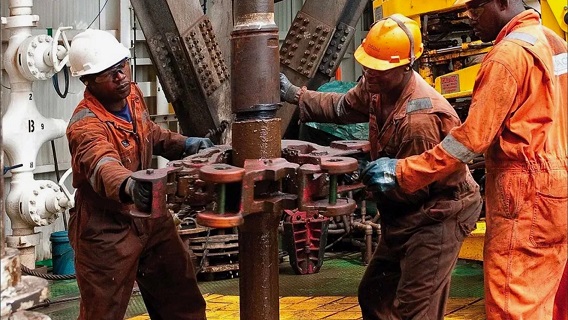
 By Africa Risk Control West Africa Desk – Nigeria stands as Africa’s largest oil producer and a pivotal player in the global energy landscape. Despite facing challenges such as security concerns and infrastructure limitations, the country’s oil and gas sector remains a cornerstone of its economy.
In 2025, Nigeria is witnessing a resurgence in production, investment, and export activities, positioning itself as a dynamic frontier for energy investments.
Production Overview
As of July 2025, Nigeria’s oil production averaged 1.71 million barrels per day (bpd), comprising 1.507 million bpd of crude oil and 204,864 bpd of condensates. This marks a 9.9% year-on-year increase from July 2024, reflecting a positive trend in output levels.
In the gas sector, Nigeria achieved a significant milestone with daily production reaching 7.59 billion standard cubic feet per day (BSCFD) in July 2025. Concurrently, gas flaring declined to 7.16%, underscoring the country’s commitment to environmental sustainability and efficient resource utilization.
• Thinking of Investing in Nigeria?
- Through our network of investigative and business journalists in 32 plus African countries, we provide verified, boots-on-the-ground insights to help investors make confident decisions.
- Trusted by international investors and NGOs for our on-the-ground intelligence.
Investment Landscape
The Nigerian oil and gas sector has attracted substantial investments in 2025. The Nigerian Upstream Petroleum Regulatory Commission (NUPRC) has approved 28 new field development plans, unlocking 1.4 billion barrels of oil and 5.4 trillion cubic feet (TCF) of gas. These developments are projected to add 591,000 bpd of oil and 2.1 BSCFD of gas to national production, with an estimated capital expenditure of $18.2 billion.
Notably, indigenous companies are increasingly driving growth. For instance, Renaissance Africa Energy Company plans to invest $15 billion over five years, while Shell has committed $5.5 billion to the Bonga North field.
Export Dynamics
Crude oil remains Nigeria’s primary export, with significant markets in India, France, Canada, Spain, the United States, and other countries. In the first half of 2025, Nigeria earned over ₦24 trillion from crude oil and petroleum gas exports, although this represents a slight decrease from the previous year.
The recent commissioning of the Dangote Refinery, Africa’s largest single-train refinery with a capacity of 650,000 bpd, has enhanced Nigeria’s refining capabilities. This development not only reduces the country’s dependency on imported refined products but also positions it as a potential exporter of refined petroleum products.
Regulatory Reforms
The enactment of the Petroleum Industry Act (PIA) has been instrumental in transforming Nigeria’s oil and gas sector. The PIA has introduced reforms aimed at improving transparency, attracting foreign investment, and optimizing revenue generation. The NUPRC continues to streamline processes and engage with international partners to bolster the sector’s growth.
Challenges and Strategic Considerations
Despite positive developments, Nigeria’s oil and gas sector faces several challenges:
• Security Concerns: Ongoing issues such as oil theft and pipeline vandalism continue to disrupt production and transportation.
• Infrastructure Limitations: Inadequate infrastructure hampers efficient resource extraction and distribution.
• Environmental Impact: Addressing gas flaring and environmental degradation remains a priority for sustainable development.
Investors are advised to consider these factors when evaluating opportunities in Nigeria’s oil and gas sector.
Future Outlook
Looking ahead, Nigeria aims to double its oil production by 2030. This ambitious goal is supported by ongoing reforms, increased investment, and technological advancements. The country’s vast reserves, coupled with strategic initiatives, position it as a key player in the global energy market.
Investment Opportunities
For investors, Nigeria offers diverse opportunities across the oil and gas value chain:
• Upstream: Exploration and production ventures, particularly in deepwater and marginal fields.
• Midstream: Investments in transportation infrastructure, including pipelines and storage facilities.
• Downstream: Opportunities in refining, petrochemicals, and distribution networks.
• Thinking of Investing in African Oil & Gas Sector?
- Through our network of investigative and business journalists in 32 plus African countries, we provide verified, boots-on-the-ground insights to help investors make confident decisions.
- Trusted by international investors and NGOs for our on-the-ground intelligence.
Engaging with local partners and understanding the regulatory landscape are crucial for successful investment ventures.
In conclusion, Nigeria’s oil and gas sector presents a landscape of opportunities and challenges. With substantial investments, regulatory reforms, and a strategic focus on increasing production, the country is poised for significant growth. Stakeholders and investors are encouraged to stay informed and engage proactively to capitalize on the evolving energy landscape.
If you require further information or assistance in exploring specific investment opportunities within Nigeria’s oil and gas sector, feel free to reach out.