
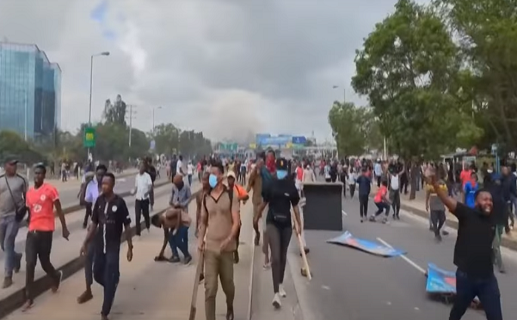
 By Africa Risk Control (ARC) – Across much of Africa, recent elections have reignited old political tensions and exposed deep-seated public grievances. From Kenya and Madagascar to Cameroon and Tanzania, what began as ordinary electoral cycles has escalated into waves of protest, violent crackdowns, and renewed questions about the continent’s political stability.
The implications reach far beyond national borders. For a continent that, until recently, was praised for economic resilience and relative peace despite global headwinds, this new wave of election-related unrest poses significant risks to investor confidence, regional trade, and long-term growth.
A pattern of unrest
In Kenya, months of anti-government protests over taxes, unemployment, and the rising cost of living have turned violent on several occasions. Demonstrations that began as peaceful expressions of frustration have frequently spiraled into clashes between protesters and security forces. The government’s firm response, including curfews and sporadic internet restrictions, has drawn criticism from human rights groups. The violence has not only shaken domestic confidence but also delayed several infrastructure and energy projects backed by foreign investors.
Madagascar has witnessed a similar story. The island nation, which had shown signs of post-pandemic recovery, faced renewed turmoil as youth-led demonstrations erupted over poor service delivery, corruption, and rising inequality. The protests, though not as deadly as in other nations, underscored a growing disillusionment among younger citizens who feel excluded from the country’s political and economic systems.
Cameroon’s recent election cycle followed the same volatile trajectory. Allegations of irregularities and the long-standing marginalization of opposition regions triggered widespread protests. Security forces responded with force, leaving dozens dead and hundreds detained, according to international observers. The government’s heavy-handed tactics deepened divisions in an already fragile state that continues to battle separatist insurgencies in its Anglophone regions.
But it is Tanzania’s recent election that has drawn the most international concern. Once celebrated for its relative stability and predictable investment climate, the East African nation has found itself in turmoil after the October 29, 2025 polls. Protests erupted over disputed results and the exclusion of opposition figures, prompting a strong security response that left several people dead. The government imposed curfews and tightened control over gatherings and the internet, further fuelling public anger.
The warning signs: from Washington to Dar es Salaam
On November 3, 2025, the U.S. Department of State updated its Travel Advisory for Tanzania, raising it from Level 2 (“Exercise Increased Caution”) to Level 3 — “Reconsider Travel.” The advisory specifically cited the addition of an “unrest” risk indicator, alongside existing concerns over crime, terrorism, and the targeting of minority groups.
The statement warned that demonstrations in Tanzania “can be unpredictable and widespread,” noting that authorities have intensified checkpoints and roadblocks in major cities and that large gatherings are often restricted or unauthorized. For foreign missions and international investors, this marked a serious deterioration in risk perception — particularly for a country that, until recently, had stood out as one of East Africa’s most promising investment destinations.
Where this trend may lead
Taken together, these crises reveal a troubling pattern. Across multiple regions, contested elections and socio-economic grievances are merging into a broader continental wave of discontent. The grievances — unemployment, corruption, governance deficits, and limited political inclusion — are remarkably consistent, as is the demographic force driving them: Africa’s restless youth majority.
If governments fail to channel these frustrations into constructive reform, the consequences could be severe. Investor confidence is highly sensitive to perceptions of political instability, and even short-term unrest can have long-term effects. Data from the African Development Bank shows that political crises typically reduce foreign direct investment (FDI) inflows by up to 20 percent in affected countries during the following fiscal year.
The economic cost is not limited to the countries in turmoil. Political risk tends to spill across borders. Investors often treat regions — East Africa, Central Africa, or the Horn — as single risk clusters. When one country experiences sustained unrest, others with similar profiles can see capital outflows, slower deal approvals, and higher insurance premiums.
For instance, Tanzania’s current situation has already sparked concerns among investors operating in neighboring Kenya, Uganda, and Mozambique, where logistics and energy corridors are closely intertwined. Disruptions to Tanzania’s port and customs systems, or potential unrest in Dar es Salaam and Arusha, could reverberate across the region’s supply chains.
Economic implications: from confidence shock to capital retreat
The continent’s macroeconomic picture was relatively strong before these crises erupted. The World Bank and African Development Bank both projected around 3.8 to 3.9 percent growth for 2025, supported by recovering commodity prices and expanding infrastructure investment. But these forecasts now face downside risks.


Election-related violence disrupts tourism, delays construction projects, and increases the cost of capital. It can also lead to currency depreciation as investors hedge against uncertainty. In countries like Tanzania and Kenya, where much of the FDI comes from sectors highly exposed to stability — such as tourism, logistics, and renewable energy — even temporary unrest can erase years of progress in investor relations.
Beyond the immediate financial costs, there is a growing reputational dimension. Firms that remain silent or appear complicit in repressive environments risk public backlash. The age of environmental, social, and governance (ESG) scrutiny means that companies can no longer separate profits from politics. Global investors are increasingly factoring governance and human-rights indicators into their decisions — and volatile election environments raise red flags on both counts.
The contagion effect
Political crises are rarely contained within borders. In Africa’s tightly connected regional blocs, unrest in one country can easily spill into another through migration, trade, and perception channels. Refugee movements place new fiscal pressures on host nations; disrupted cross-border trade inflates prices and worsens inflationary trends.
Moreover, the securitization that often follows election-related violence — roadblocks, curfews, and expanded military budgets — tends to erode civic trust and heighten tensions rather than resolve them. Over time, this cycle can create what analysts call a “confidence deficit,” where both citizens and investors assume instability is the norm, not the exception.
What this means for investors and policymakers
For foreign investors, the message is clear: political due diligence is no longer a luxury. Businesses must evaluate not only macroeconomic indicators but also governance trajectories and public sentiment trends. Social media monitoring, real-time protest mapping, and scenario forecasting have become essential tools for risk-aware decision-making.
Policymakers, too, must take lessons from these crises. Suppressing dissent without addressing its root causes — unemployment, inequality, and exclusion — offers only temporary calm. Inclusive governance and transparent electoral management are not just democratic ideals; they are economic imperatives.
Tips for Investors
For investors, development partners, and multinational firms already engaged in Africa, now is the time to reassess exposure and strengthen resilience. This is where Africa Risk Control (ARC) provides value.
ARC’s Political and Country Risk Advisory helps investors anticipate disruptions, assess exposure scenarios, and implement mitigation strategies. Through a network of on-the-ground analysts, journalists, and regional experts, ARC delivers verified intelligence across East, Central, and Southern Africa — from forecasting protest dynamics to evaluating their impact on key investment corridors. You can book for a free 20 minutes consultation call to discuss about our political risk advisory services specific to an African country of a sub region.
As Africa’s political landscape grows more complex, success will belong to those who prepare — not react. The lesson from the recent election crises is clear: stability cannot be assumed. It must be monitored, analyzed, and actively managed.