
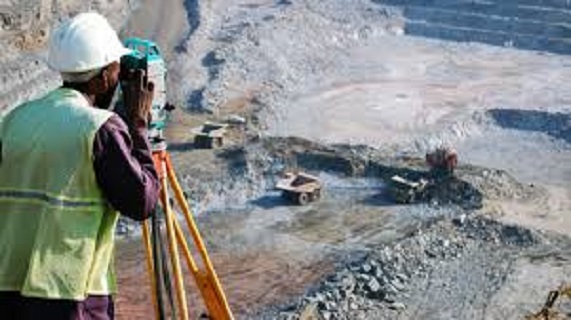
An investor-focused country insight (narrative format with production, exports, major players, challenges, opportunities, way forward and practical investor tips).
By Africa Risk Control (ARC) – Zambia’s story is a mining story. For more than a century copper has shaped the country’s politics, balance sheet and towns — and today, as the world races to decarbonize, Zambia sits again in a position of strategic importance.
The arguments are simple but huge: rising global demand for copper (and copper-associated metals such as cobalt) to feed grids, EVs and batteries means Zambia’s resource base is a potentially transformative asset. But the reality on the ground is never just geology; it’s a mix of policy swings, legacy infrastructure, company strategy and logistics — and that mix is what any serious investor must understand before committing capital.
Production and export trends over recent years show that Zambia remains a heavyweight. The Mines Ministry reported a marked recovery in 2024, with national copper output rising to roughly 820,676 metric tonnes from about 732,583 tonnes in 2023 — a bounce driven by higher recoveries at existing operations and the gradual resumption of some previously idled assets. Mining remains central to the economy: copper accounts for the lion’s share of export earnings and a very large component of government revenue, shaping fiscal policy and foreign-exchange availability.
Beneath those national numbers are distinct company stories. First Quantum Minerals has been the most visible success story in recent years: its Kansanshi and Sentinel operations together are the engine of Zambia’s output growth, with production guidance and expansion programs that materially lift national volumes. First Quantum’s published guidance and corporate reports show Kansanshi and Sentinel producing hundreds of thousands of tonnes collectively and provide the backbone for much of Zambia’s near-term production outlook.
Meanwhile, Vedanta’s return to full control of Konkola Copper Mines and its stated plans to refurbish smelter capacity point to further upside should those plans succeed — but also to the political and technical complexity investors must navigate. Other actors — Barrick (Lumwana), Glencore-linked assets, Mopani legacy assets and state-linked ZCCM-IH — all play structural roles in the supply picture.
Cobalt deserves a short, pragmatic note: Zambia produces cobalt principally as a by-product of copper operations. Global cobalt markets have been volatile — 2023 saw record production increases and oversupply pressures — which means cobalt price exposure is real but linked to demand-side dynamics in batteries and to output decisions in the DRC and Indonesia. For Zambian projects that yield cobalt as a by-product, economics will often be driven by copper fundamentals, with cobalt adding incremental upside or downside depending on market cycles.
The sector’s challenges are both old and newly urgent. Policy instability — frequent changes to tax, royalty and local-content rules — has been a perennial investor concern and remains a negotiating point between government and developers. Infrastructure gaps (reliable power, corridors to ports), legacy environmental liabilities and social grievances in host communities complicate permitting and operations.
The dispute and subsequent return of KCM to Vedanta illustrated how legal and political contestation can freeze assets for years; the restart requires heavy capital for refurbishment and carries execution risk. Operational risks — from safety incidents to heavy rainfall and flooding that can temporarily halt mining activities — add a layer of unpredictability. Finally, the concentration risk of an economy reliant on a single commodity exposes investors to sovereign and macro shocks if copper prices fall.
Yet the opportunities are tangible and, for the patient and well-prepared, attractive. Zambia’s reserves base is extensive and underexplored in many corridors; greenfield discoveries and brownfield expansions both offer pathways to scale. Recent expansion projects (for example capacity projects at Kansanshi and Sentinel) demonstrate that with capital and technical capability, output can be materially increased.
The Zambian government and state entities have signalled ambitions to capture more value domestically — exemplified by new trading and offtake arrangements and partnerships to develop downstream processing and trading hubs — and international trading houses have shown interest in partnering with local state-owned vehicles to create more integrated value chains. If implemented sensibly, that could raise local value retention and create a marketplace for smelting, refining and local beneficiation.
For investors the practical pathway matters more than the headline. Greenfield projects will need deep technical due diligence: independent resource and reserve audits, metallurgy checks (recoveries and concentrate quality), power modelling, water studies and tailings management plans that satisfy international lenders.

Brownfield investments: expansions, smelter refurbishments, or acquiring distressed assets — require forensic legal and historical operational reviews: ownership histories, legacy liabilities, existing off-take and royalty burdens, and the degree of state influence or entanglement (especially with ZCCM-IH). Corporate governance and counterparty checks are not optional: political connections can ease access but can also produce regime- and reputational risk.
What should the way forward look like, from a public-policy and investor-alignment perspective? – – First, predictable and consultative fiscal regimes anchored by stabilization clauses would unlock more capital.
– Second, targeted investment in logistics and energy — both grid and off-grid renewables — will lower unit costs and increase the attractiveness of longer-life projects.
– Third, a pragmatic plan to local beneficiation that balances economics and skills development would add value, but must be sequenced: first secure stable feedstock and competitiveness, then progressively capture more downstream margins.
– Finally, transparent and timely dispute-resolution mechanisms — ideally with arbitration frameworks seen as reliable by international investors — will reduce the political risk premium and the price of capital. Some recent public–private moves (including trading partnerships and the creation of trading units) suggest Zambia is trying to move along this path, but implementation is everything.
Investor tips — concrete and action-oriented: – Treat fiscal and legal stability as the principal deal risk. Build scenarios around potential royalty and tax changes and negotiate stabilization where possible
– Insist on third-party technical audits that include metallurgical testwork; recoveries and concentrate quality can swing project economics far more than headline grades.
– Structure offtake and payment terms to hedge forex and payment risk — consider escrowed proceeds or partial prepayment structures with reputable traders.
– Prioritise partners with local operational experience and an established community engagement track record; social licences are fragile and cost real dollars when broken.
– Factor in tailings and closure liability costs up front; lenders and insurers now price environmental risk into finance terms aggressively.
– For downstream or processing plays, model energy solutions carefully — grid supply plus renewables hybrid models are increasingly viable and may be eligible for development finance.
In conclusion, Zambia’s mining sector offers a blend of scale and strategic relevance that few African commodities can match. The upside — greater production, renewed smelter capacity, and a stronger role in the copper and battery metal supply chain — is real.
But capturing that upside requires a sober reading of governance, infrastructure and execution risk. Investors who combine rigorous technical and legal due diligence with pragmatic, locally anchored operational partners and flexible financing structures stand the best chance of converting Zambia’s copper potential into durable returns.
Before committing to any mining venture or partnership in Zambia, ensure your decisions are based on verified intelligence. Africa Risk Control (ARC) conducts in-depth investigative due diligence and market verification across Africa — helping investors, lenders, and corporations identify true ownership, regulatory compliance, and ESG risks before they sign.
Our team of analysts and investigative journalists based across the continent deliver independent insights that protect capital and reputation.
Contact ARC’s Gaborone or South Africa Desk today for a confidential due diligence briefing or partnership verification before your next deal.