
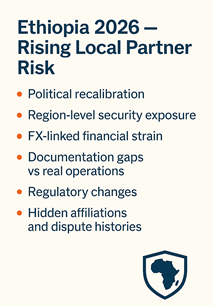
 Two new reports by Africa Risk Control (ARC) have stated that Ethiopia’s 2026 risk environment is now shaped more by district-level developments than national indicators.
ARC highlights that localized political dynamics, mobility constraints, and community relations are becoming decisive for operational continuity. Entitled, Ethiopia Country Risk Profile 2026, stated that while national reforms remain ongoing, regional governance behavior varies widely. Administrative interpretation of regulations, local approval processes, and licensing reliability differ from one district to another, influencing project timelines.
Security factors also vary across regions. ARC notes that frequent short-lived clashes, local disputes, and border-area tensions create unpredictable mobility conditions. These issues affect logistics and access to agricultural and industrial zones. The second report by ARC, Ethiopia Micro Risk Brief Q1/2026 also delved into the immediate investors must watch during the first quarter of 2026 and mitigation strategies.
FX pressure continues to influence operational behavior of local companies, pushing some toward informal options that increase compliance exposure. The two reports conclude that investors planning market entry or expansion in 2026 must rely on field-verified intelligence and district-level assessments instead of broad national trends.