
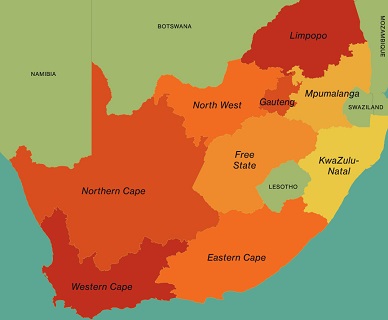
 By Africa Risk Control (ARC) – Lesotho — a landlocked, high-altitude kingdom entirely surrounded by South Africa — offers a surprisingly rich mix of resources, strategic location, and affordable labour. With a population of around 2.3 million, the country recorded an estimated GDP of US $2.3 billion in 2024, translating to a per capita income of about US $1,067.
While small in absolute size, Lesotho’s economy is gradually diversifying beyond its traditional base of textiles and remittances, supported by infrastructure investment, water exports, and growing interest in renewable energy.
Economic Structure and Performance
The Lesotho economy rests on three pillars: services, industry, and agriculture. Services dominate, contributing roughly 50.6% of GDP, followed by industry at 28.7%, and agriculture at about 6.6%. Within industry, manufacturing — mainly textiles and apparel — accounts for close to 15% of GDP, employing over 40,000 workers and generating more than 40% of total exports. Other important components include construction and mining, with diamonds as the leading export commodity.
Lesotho’s economic growth rate of 2.6% in 2024 reflects modest but stable expansion, buoyed by investments in the Lesotho Highlands Water Project (LHWP) and the resilience of its garment industry. Inflation remains manageable at about 6%, while public debt hovers around 60% of GDP, within the regional average for low-middle-income economies. However, challenges persist: nearly half of the population lives below the poverty line, and income inequality remains high, with a Gini coefficient of 0.54.
Key Investment Opportunities
1. Textiles and Apparel Manufacturing
Lesotho’s textile and garment sector is the country’s largest formal employer and primary export generator. For two decades, it has benefited from preferential trade agreements such as the African Growth and Opportunity Act (AGOA) and the EU’s Everything But Arms (EBA) initiative. The sector produces denim, knitwear, and workwear for leading international brands.
However, the global apparel market is changing rapidly, with increasing automation, sustainability standards, and shifting consumer preferences. Investors who reposition towards higher-value, sustainable manufacturing can find solid ground. Opportunities lie in vertical integration—establishing fabric dyeing, printing, or packaging plants locally—to capture more value along the supply chain. Integrating technology, digital compliance systems, and cleaner production can also make Lesotho’s factories more globally competitive.
2. Water Infrastructure and Hydropower
Water is Lesotho’s “white gold.” The Lesotho Highlands Water Project, one of Africa’s largest transboundary water infrastructure schemes, exports billions of cubic metres annually to South Africa’s industrial heartland, generating substantial foreign exchange.
Phase II of the project, now under construction, includes new dams, tunnels, and hydropower components, creating openings for private investors in engineering services, public-private partnerships (PPPs) for water treatment and distribution, and renewable energy systems linked to hydropower. Such projects often attract blended finance from institutions like the World Bank and African Development Bank, making them suitable for long-term, risk-tolerant investors seeking stable, dollar-linked returns.
3. Renewable Energy Expansion
Beyond hydro, Lesotho is moving toward solar and wind energy to diversify its grid and reduce dependence on imported electricity from South Africa. The government’s renewable energy policy encourages independent power producers (IPPs), and feasibility studies for small hydro and solar hybrid plants are already underway. For investors, pairing renewable generation with industrial park development—providing stable power to manufacturers—offers a scalable and sustainable model.
4. Agribusiness and Value Addition
Agriculture employs a large share of Lesotho’s rural population yet contributes less than 7% to GDP, underlining its productivity challenge. Investors can play a transformative role by introducing value-added processing. The country’s mohair and wool are among the finest in the world, but most are exported raw. Establishing washing, spinning, and weaving plants could significantly raise export earnings while generating rural employment.
Furthermore, Lesotho’s cool climate supports high-value horticulture, such as organic vegetables, herbs, and berries. Investments in greenhouses, irrigation, and cold-chain logistics could enable consistent exports to South Africa and beyond. Development finance institutions are particularly supportive of such inclusive agribusiness ventures.
5. Tourism and Hospitality
Lesotho’s rugged terrain and high-altitude climate create natural assets for eco-tourism and adventure travel. The Drakensberg Mountains, snow-capped in winter, attract niche markets for skiing, hiking, and mountain biking. With proper investment in boutique lodges, adventure tour operators, and digital marketing, tourism can grow beyond its current modest GDP share. Its proximity to South Africa offers easy access for regional and international tourists.
6. Mining and Natural Resources
Lesotho has several diamond mines, including the world-renowned Letšeng Mine, known for producing some of the highest-value diamonds globally. Although mining contributes a smaller share to GDP compared to textiles, ongoing exploration for other minerals could open new frontiers. Investors can consider joint ventures, supply chain logistics, or value addition in cutting and certification, aligning with global traceability and ethical sourcing standards.
Risks and Structural Challenges
Lesotho’s political volatility is its primary risk factor. Frequent coalition changes and occasional military involvement in politics have led to uncertainty around policy continuity. Investors should insist on strong legal protections, dispute resolution clauses, and political risk insurance when structuring deals.
Economic dependence on South Africa also poses a vulnerability. Lesotho’s membership in the Southern African Customs Union (SACU) provides revenue stability but also exposes it to South Africa’s economic cycles. Infrastructure costs are high due to mountainous terrain, and logistics depend on South African corridors for port access. Furthermore, health challenges, particularly the high HIV/AIDS prevalence, can affect labour productivity.
Risk Mitigation and Entry Strategies
– Investors entering Lesotho should take a phased and partnership-based approach:
– Engage early with development finance institutions (DFIs) such as the AfDB or IFC. They often co-finance projects while offering de-risking instruments and social governance support.
– Form joint ventures with local firms to strengthen community relations and ensure smoother government engagement.
– Prioritize ESG (Environmental, Social, Governance) compliance. Projects that incorporate community benefits—health initiatives, training programs, or gender inclusion—receive faster approvals and better reputational outcomes.
– Structure financing in tranches, tied to performance milestones, especially for infrastructure or industrial projects.
– Use multi-sector integration to diversify exposure. For instance, combining a renewable energy project with an industrial park or water project can stabilize cash flow and broaden impact.
Tips for Investors
Do Enhanced Due Diligence — Political and land-related risks require detailed verification. Investors should cross-check title deeds, licensing authenticity, and government counterparties through trusted intermediaries.
Secure Political Risk Cover — Insurance from providers like MIGA or Afreximbank can protect against expropriation, transfer restrictions, and civil disturbance.
Focus on Human Capital — Building local skills and offering training improves productivity and social license to operate.
Adopt Sustainable Practices — Lesotho’s environment is fragile; investors integrating renewable energy, water efficiency, and waste reduction will have an advantage in securing international finance.
Leverage Regional Integration — Lesotho’s access to the Southern African market of over 300 million consumers makes it ideal for export-oriented investments.
Be Realistic on Scale — The domestic market is small; success depends on cross-border trade, export strategies, and regional partnerships.
In conclusion, Lesotho’s investment landscape is one of small scale but high potential. Its strengths—strategic location, low-cost labour, abundant water resources, and preferential market access—offer investors a rare opportunity to build sustainable, export-oriented ventures. While political and structural challenges exist, they are manageable through informed due diligence, strong local partnerships, and disciplined risk management.
Investors willing to look beyond market size and focus on efficiency, sustainability, and regional integration will find Lesotho a rewarding niche frontier. The next decade could see the country evolve from a textile-dependent economy into a diversified hub for water-energy infrastructure, value-added manufacturing, and sustainable agribusiness.
For investors, lenders, and corporations exploring opportunities in Lesotho or the wider Southern African region, reliable intelligence and local verification are crucial.
Africa Risk Control (ARC) provides investigative due diligence, partner verification, and political risk analysis—helping investors make informed, compliant, and secure decisions before committing capital.
Our country analysts and investigative partners across Africa deliver ground-truth insights that go beyond public data—verifying local partners, project viability, and political exposure.
Contact ARC to conduct pre-investment due diligence or country risk assessments in Lesotho and beyond.